RedVDS Takedown: How Microsoft Disrupted Global Email Fraud
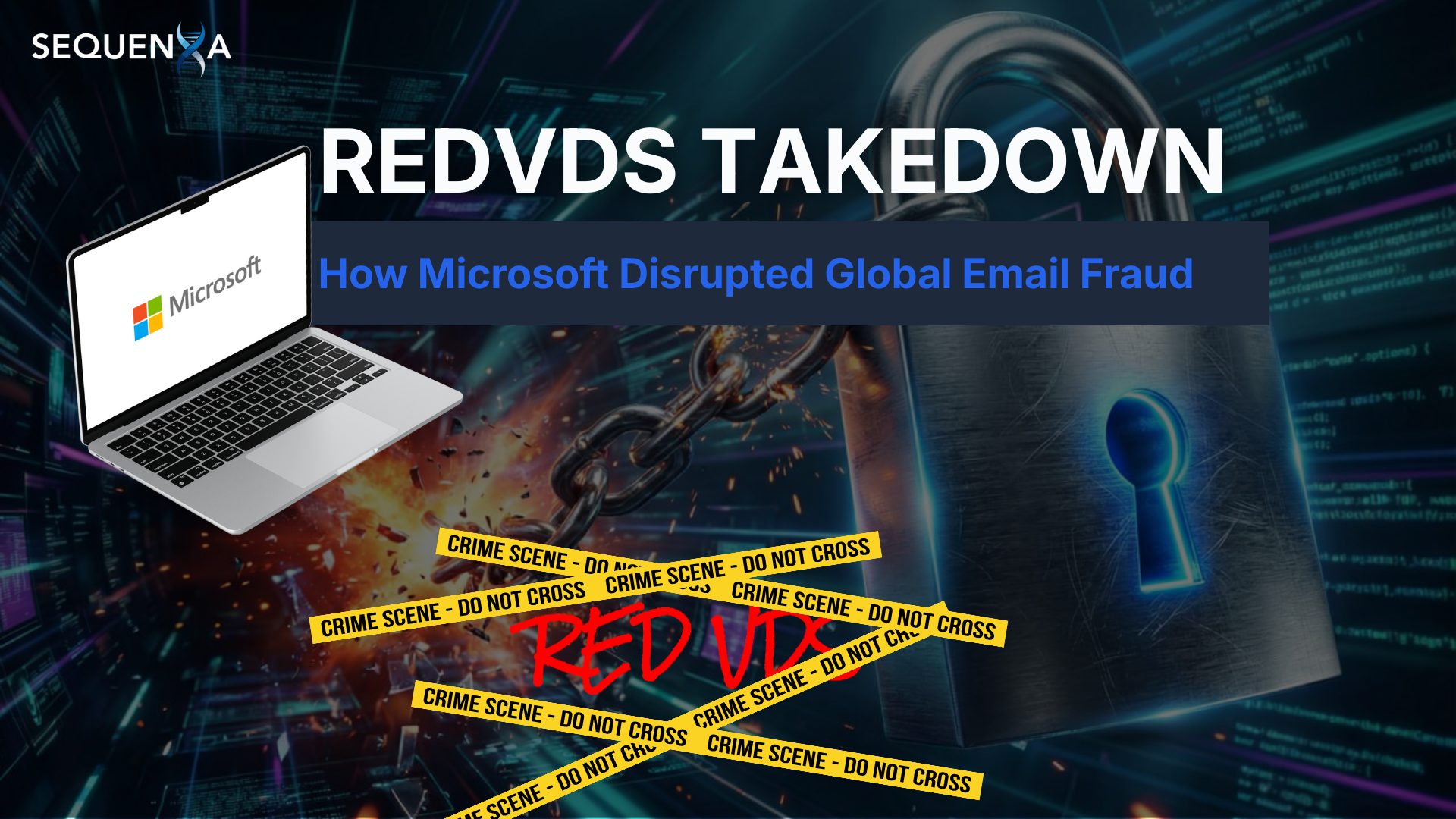
Microsoft's Digital Crimes Unit and international law enforcement disrupted RedVDS in January 2026, a notorious virtual desktop rental service that fueled cybercriminal operations worldwide. For six years, RedVDS enabled massive-scale business email compromise attacks, resulting in over $40 million in verified fraud losses across the United States alone. The platform's accessibility, costing as little as $24 monthly with no technical barriers, transformed cybercrime infrastructure into a commodity service. This disruption marks a significant victory in combating organized financial fraud, but security experts warn that similar platforms will likely emerge to fill the void.
What Is RedVDS?
RedVDS is a virtual desktop service operated by the threat actor tracked as Storm-2470. It's deliberately designed as infrastructure for rent: customers purchase disposable Windows Server instances through cryptocurrency channels, gaining remote access and complete administrative privileges.
The genius isn't in the technology, it's in the business model. By using a single cloned Windows image across thousands of instances, RedVDS kept costs paper-thin and complexity low.
Example: A small accounting firm employee unknowingly approved a wire transfer after receiving an invoice update from what appeared to be a trusted vendor, sent from a RedVDS-hosted Windows server using a lookalike domain.
How does lowering the technical barrier to entry change who can commit large-scale financial cybercrime?
How RedVDS Operates at Scale
The service launched in 2019 and operated openly through domains like redvds.com, redvds.pro, and vdspanel.space until January 2026, when coordinated law enforcement action and Microsoft's Digital Crimes Unit disrupted its operations.
During its active years, RedVDS became the infrastructure backbone for multiple cybercriminal groups. It targeted finance departments, real estate firms, legal practices, healthcare providers, and educational institutions across North America, Europe, Australia, and beyond.
Did you know? Microsoft observed RedVDS-linked activity in more than 90 countries during its operational lifetime.
“Scale is the real weapon here, automation turns fraud into a volume business.”
Why RedVDS Was So Dangerous
The accessibility is what made it lethal. Unlike sophisticated malware-as-a-service platforms that require technical expertise, RedVDS operated like a commodity hosting provider, purchase, deploy, attack.
This flattened the entry barrier for financial fraud campaigns at global scale. Any criminal with a credit card and cryptocurrency access could launch enterprise-grade attacks.
Should cybercrime-enabling platforms be treated legally like weapons suppliers?
Evaluate whether your defenses assume attackers are sophisticated, or simply persistent.
How RedVDS-Powered Attacks Work

The Reconnaissance Phase
The attack chain starts with reconnaissance. Criminals lease a RedVDS instance, then research target organizations: identifying key personnel, understanding payment workflows, and studying email communication patterns.
They harvest business email addresses using tools like Sky Email Extractor. This creates the targeting list for mass phishing campaigns.
Mass Phishing Infrastructure
Once inside RedVDS, attackers install mass mailer utilities, SuperMailer, UltraMailer, BlueMail, creating a full phishing operation on a $24-per-month rental.
This converts a cheap virtual desktop into an industrial-scale attack platform. Thousands of phishing emails can be deployed in minutes.
AI-Generated Phishing Lures
The phishing emails themselves are increasingly sophisticated. Microsoft observed RedVDS users leveraging OpenAI tools and ChatGPT to generate polished English-language lures, overcoming language barriers.
This made campaigns far more convincing. Victims clicked links at higher rates because the messages read professionally, not like broken-English scams.
Credential Harvesting and Token Theft
Victims click links, credentials are harvested, and here's the critical part: criminals use stolen credentials to access email accounts and extract session tokens.
These tokens bypass multifactor authentication, giving attackers direct inbox access without needing passwords or MFA codes.
Email Thread Hijacking
Once inside a compromised inbox, attackers study existing vendor relationships and pending invoices. They create homoglyph domains, lookalike websites that mimic legitimate suppliers with character substitutions.
A real conversation about an invoice becomes an impersonated conversation about a payment redirect. By January 2026, Microsoft traced over 7,300 RedVDS-linked IP addresses hosting more than 3,700 homoglyph domains in a single 30-day window.
Example: Attackers hijacked an ongoing email thread about a routine invoice, inserted a payment update mid-conversation, and redirected funds without triggering suspicion.
Did you know? Microsoft reported a 35% higher click-through rate for AI-generated phishing emails compared to traditional lures.
“When attackers live inside real conversations, users stop questioning authenticity.”
Fraud at Scale: Real Estate and Payment Diversion
Real Estate Fraud Mechanics
Organizations in real estate face particular risk because their normal workflows involve frequent payments to multiple vendors and external parties. RedVDS attacks systematically target these sectors.
The attack surface, transaction volume, legitimacy of fund transfers, multiple authorized signatories, creates confusion that fraud exploits.
Payment Diversion Tactics
Payment diversion is the core tactic. Criminals don't need to compromise banking systems; they just need one person to approve one wire transfer to an attacker-controlled account.
The homoglyph domain makes the request look legitimate. The hijacked email thread provides social proof. The urgency in the lure pressures decision-making.
High-Value Targets
A construction firm receives what appears to be a vendor invoice. A real estate company gets an urgent payment request from what looks like a trusted partner. A pharmaceutical firm sees an internal communication about banking updates.
Fraudulent wire transfers follow, often in the hundreds of thousands of dollars. Microsoft documented cases where single targets lost $7.3 million or more.
What business processes unintentionally reward speed over verification?
Did you know? Real estate transactions account for nearly 20% of high-value BEC losses reported in North America.
Lateral Movement and Escalation
Lateral Movement After Compromise
Once credentials are compromised, RedVDS customers use those accounts to move laterally within organizations. They research other employees and discover new targets.
Sometimes they escalate access to administrative systems. The damage multiplies with each new account compromise.
Internal Infrastructure Weaponization
In several documented cases, attackers compromised user accounts, then created phishing lures and uploaded them to the victim's own SharePoint infrastructure.
This effectively weaponized the victim's infrastructure to compromise colleagues. Financial data, banking information, and bulk invoice downloads follow.
The Logging Gap Problem
The absence of logging on RedVDS servers compounds the problem. Criminals operate without oversight or accountability records, making forensics difficult.
By the time an organization detects compromise, the damage is usually done. Attribution becomes nearly impossible.
Example: After compromising one inbox, attackers used internal SharePoint links to phish five additional employees in the same department.
“Once trust is broken internally, containment becomes exponentially harder.”
How to Defend Against RedVDS-Style Attacks
Email Authentication: The First Line
Most organizations fail to enforce DMARC, SPF, and DKIM properly, leaving themselves vulnerable to domain spoofing. Enforce SPF first.
Implement DMARC at enforcement mode (p=reject). Validate DKIM signatures rigorously. This prevents attackers from impersonating your domain from RedVDS infrastructure.
Multifactor Authentication Requirements
Implement multi-factor authentication universally, especially for finance staff, email administrators, and anyone handling payments. Passkeys offer phishing resistance.
If traditional MFA is your starting point, conditional access policies should require additional verification for sensitive actions like inbox rule creation.
Behavioral Anomaly Monitoring
Monitor for unusual patterns: inbox rules created after hours, mailbox forwarding changes, unexpected geographic access from administrative accounts, and sudden mass emailing from internal accounts.
These are all signals of compromise. Deploy email security tools that track behavioral anomalies in real-time.
Finance Team Training
Generic security training misses the point. Your finance team needs to understand homoglyph domains, email thread hijacking, and the psychology of invoice fraud.
They need to verify sender domains carefully and confirm payment changes through out-of-band communication channels.
Vendor Email Verification
Assume vendor email compromise. If you receive an unexpected payment request from a vendor, verify through a phone number stored in your own systems.
Don't use contact details provided in the email. This single discipline would have prevented many RedVDS-enabled attacks.
“Email authentication is boring, but it’s devastatingly effective.”
Which defensive control, technology or process, delivers the greatest fraud reduction?
FAQs
What role did RedVDS play in Business Email Compromise scams?
RedVDS enabled RedVDS cybercrime by operating as Cybercrime-as-a-Service, allowing criminals to launch large-scale Business Email Compromise scams and Payment diversion fraud with minimal technical skill.
How did Microsoft disrupt RedVDS cybercrime operations?
Microsoft cybercrime disruption, led by the Microsoft Digital Crimes Unit, worked with international partners under International cybercrime law to dismantle RedVDS infrastructure linked to Storm-2470.
Why is AI-generated phishing more dangerous than traditional phishing?
AI-generated phishing leverages automation and natural language fluency to bypass user suspicion, undermining Phishing attack prevention and increasing the likelihood of Account takeover prevention failures.
How do homoglyph domain attacks enable payment diversion fraud?
Homoglyph domain attacks facilitate Email thread hijacking, making Vendor email compromise and Payment diversion fraud appear legitimate to victims approving urgent transactions.
What email security solutions are most effective for BEC prevention?
Modern Email security solutions should combine Zero-trust email architecture, Email authentication, DMARC enforcement, proper SPF DKIM DMARC setup, and Multifactor authentication to support strong BEC prevention and CEO fraud prevention.
Which industries are most at risk from RedVDS-style attacks?
Sectors handling frequent payments, especially real estate, healthcare, and supply chains, require focused Real estate fraud prevention, Healthcare email security, Supply chain fraud controls, and strong Incident response planning.
Beyond RedVDS: What's Next
RedVDS is now disrupted, but it won't be the last. The economics of cybercrime-as-a-service are too attractive to abandon.
New platforms will emerge, new threat actors will operate similar services, and the attack surface will remain unchanged.
Your defense needs to match the scale of modern financial fraud: authentication that can't be bypassed, processes that assume external email is risky, and people trained to question urgency.
Secure identity, validate communication, and verify transactions. Nothing exotic. Just the fundamentals, consistently enforced.
We work with organizations focused on strengthening core fraud defenses. If you're exploring these priorities and want to connect with our team, you can request an introduction directly through our website.
If you’re ready to strengthen identity, email, and payment defenses, connect with our team to start the conversation.
References
Microsoft. (2026). Microsoft Digital Crimes Unit disrupts global cybercrime infrastructure used in business email compromise. Retrieved from https://www.microsoft.com/security/blog
Microsoft Threat Intelligence. (2025). Business email compromise: Tactics, techniques, and infrastructure. Retrieved from https://www.microsoft.com/security/blog/threat-intelligence
Federal Bureau of Investigation. (2024). Internet Crime Report 2023. Retrieved from https://www.ic3.gov/Media/PDF/AnnualReport/2023_IC3Report.pdf
Federal Bureau of Investigation. (2025). Business Email Compromise and payment diversion fraud. Retrieved from https://www.ic3.gov/Media/Y2025/PSA250101
Cybersecurity and Infrastructure Security Agency. (2024). Defending against business email compromise. Retrieved from https://www.cisa.gov/business-email-compromise
National Institute of Standards and Technology. (2024). SP 800-177: Trustworthy email. Retrieved from https://csrc.nist.gov/publications/detail/sp/800-177/final
National Institute of Standards and Technology. (2023). SP 800-63: Digital identity guidelines. Retrieved from https://pages.nist.gov/800-63-3
DMARC.org. (2024). DMARC overview and deployment guidance. Retrieved from https://dmarc.org/overview
Internet Engineering Task Force. (2014). RFC 7208: Sender Policy Framework (SPF). Retrieved from https://datatracker.ietf.org/doc/html/rfc7208
Internet Engineering Task Force. (2011). RFC 6376: DomainKeys Identified Mail (DKIM) Signatures. Retrieved from https://datatracker.ietf.org/doc/html/rfc6376
OpenAI. (2024). Misuse and abuse prevention in AI-generated content. Retrieved from https://openai.com/policies/usage-policies