VMware Vulnerability Exploited: What Organizations Must Know
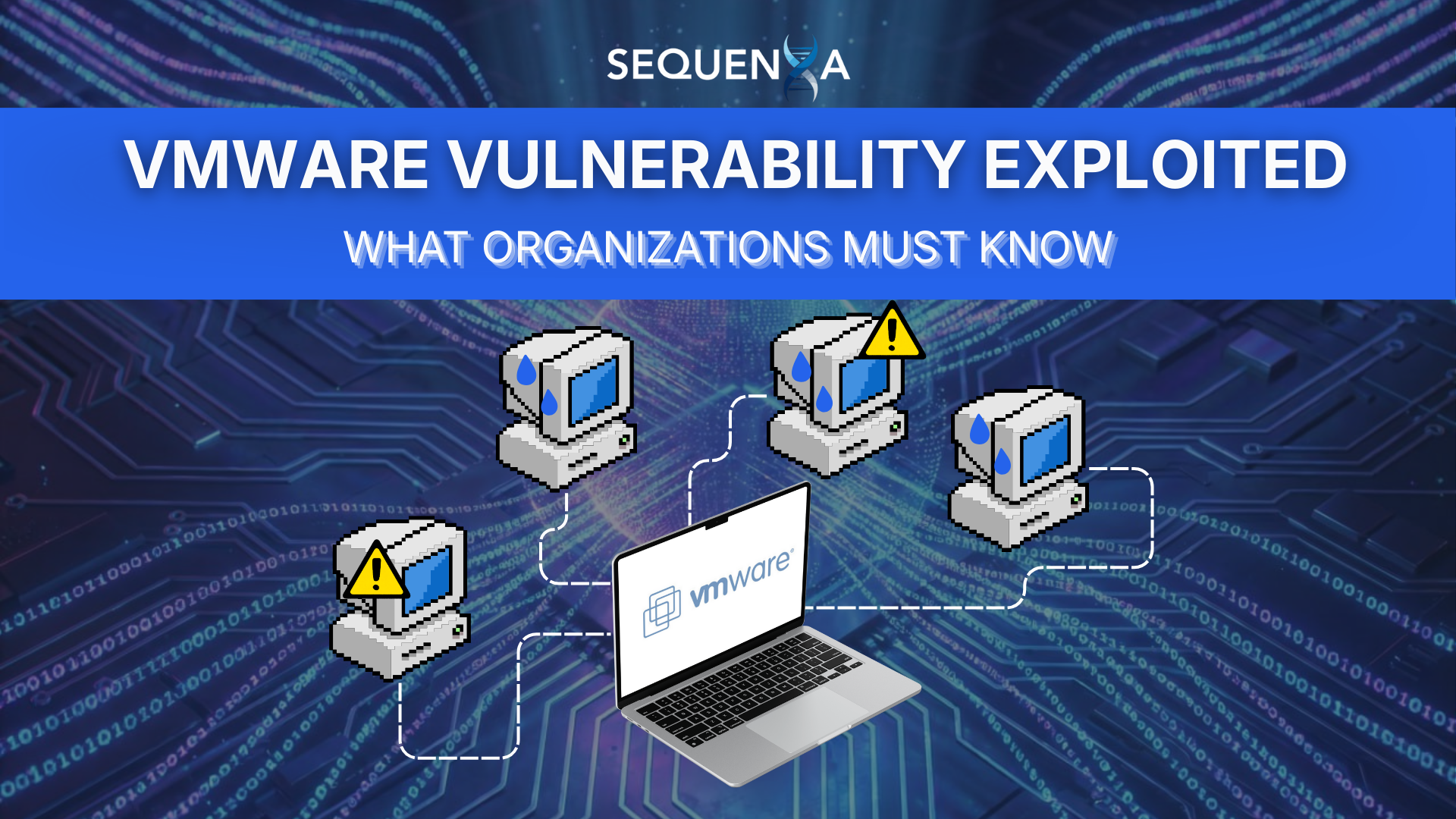
On January 24, 2026, the U.S. Cybersecurity and Infrastructure Security Agency (CISA) officially added CVE-2024-37079 to its Known Exploited Vulnerabilities (KEV) catalog, confirming that attackers are actively exploiting a critical flaw in VMware vCenter Server.
For Federal Civilian Executive Branch agencies, the message is unmistakably urgent: patch your systems by the February 13 deadline, or face compliance violations. But there's a sobering reality beneath the headlines that affects all organizations, regardless of sector. Even if you successfully apply the CVE-2024-37079 fix today, you may already be compromised by attackers who exploited this flaw during the seven-month patching gap.
“Once attackers gain administrative access to vCenter, the environment should be assumed compromised until proven otherwise”
If your organization patched vCenter Server only after the CISA February 13 deadline, what evidence do you have that attackers did not already gain access?
CVE-2024-37079 Exploit Details
The Heap Overflow Vulnerability
CVE-2024-37079 is a critical heap overflow vulnerability in the DCERPC protocol implementation of VMware vCenter Server, carrying a CVSS score of 9.8, the highest severity rating. This VMware heap overflow flaw is particularly dangerous because attackers can exploit it with remarkable simplicity. With network access to a vCenter Server, they can deliver a specially crafted packet and achieve remote code execution without needing credentials or user interaction. The vCenter Server RCE vulnerability affects VMware vCenter Server 7.0, 8.0, and VMware Cloud Foundation, making it a widespread threat across enterprise virtualization environments.
The Patching Timeline and Delayed Deployment
Broadcom released the CVE-2024-37079 patch in June 2024 as part of emergency patch VMSA-2024-0012. Yet despite this critical security update being available for seven months, organizations are only now receiving formal enforcement deadlines from CISA. This extended gap between CVE-2024-37079 patch availability and organization-wide deployment illustrates a persistent challenge in infrastructure security.
Many organizations lack the resources, processes, or organizational velocity to apply emergency patches to critical systems like vCenter Server quickly enough. The discovery was credited to researchers at Chinese cybersecurity firm QiAnXin LegendSec, demonstrating that VMware vulnerabilities continue to be actively researched and exploited globally.
The Broader Vulnerability Family
At the Black Hat Asia conference in April 2025, researchers disclosed that CVE-2024-37079 is part of a broader vulnerability family affecting VMware's DCERPC infrastructure. Understanding this context is important because it shows that attackers have multiple entry points into VMware infrastructure, and patching a single CVE-2024-37079 vulnerability address only one aspect of the risk landscape. Organizations must assess their entire vCenter appliance security posture, not just this singular flaw.
Did you know? Heap overflow vulnerabilities account for over 25% of high-severity VMware RCE flaws disclosed since 2020, according to vulnerability trend analysis.
Audit all management interfaces exposed to internal networks and restrict DCERPC access immediately.
The Exploitation Chain

Understanding Hypervisor Escape Attack Chains
The true danger emerges when organizations understand the full exploitation chain. CVE-2024-37079 alone provides remote code execution on vCenter Server. But when chained with additional vulnerabilities, such as privilege escalation flaws patched later in 2024, attackers can achieve unauthorized root access on ESXi hypervisors. This represents a hypervisor escape attack chain that grants complete control over virtualized infrastructure. Once an attacker achieves ESXi hypervisor compromise through this exploitation pathway, the consequences extend far beyond a single system compromise.
The Scope of Infrastructure Impact
With root access to an ESXi host, an attacker can escape from individual virtual machines to access the underlying hypervisor. This provides access to all VMs running on the affected ESXi system simultaneously. They can establish persistent backdoors across the entire infrastructure, perform lateral movement to other ESXi hosts and vCenter appliances, and stage data for exfiltration or deploy ransomware across all virtual environments. This scenario illustrates why understanding VMware vSphere architecture vulnerability risks is critical.
VM Escape Ransomware Scenarios
Unlike traditional network compromises, a hypervisor compromise provides attackers access to every workload simultaneously. Recent attacks leveraging similar infrastructure weaknesses have deployed VM escape ransomware that encrypts all guest virtual machines at once. Ransomware recovery ESXi backup strategies become essential for organizations that fail to prevent this type of attack. The scenario demonstrates why hypervisor security hardening and ESXi offline patch processes must be prioritized over incremental, scheduled patch deployments.
Example: Attackers used vCenter RCE as the initial foothold, then chained a later ESXi privilege escalation flaw to gain root access, enabling a full hypervisor escape attack chain.
Are your detection tools designed to identify attack chains, or only isolated vulnerability events?
Check If VMware Vulnerable CVE-2024-37079
Assessing Your Infrastructure Vulnerability Status
The Federal agencies VMware patching deadline of February 13, 2026 signals urgency, but most organizations remain behind schedule. To check if VMware vulnerable to CVE-2024-37079, security teams need to inventory all vCenter Server systems and verify current vCenter versions. The minimum required versions are vCenter Server 8.0 U2d patch or later for version 8, and vCenter Server 7.0 U3r for version 7. Review ESXi version vulnerability assessment to ensure every ESXi hypervisor in your environment meets minimum patch levels. Check VMware Cloud Foundation patch status separately, as it follows a different update cycle than standalone vCenter deployments.
Addressing Patching Challenges
Many organizations cannot download VMware patches or lack current Broadcom ESXi patch download portal access, creating bottlenecks in patch deployment. The complexity of vCenter Server patch installation steps often delays critical updates due to operational concerns and downtime requirements. Whether using VMware vSphere Lifecycle Manager patching, VUM patch management, or manual ESXi patch application via command line, the process requires careful coordination to avoid unplanned downtime. The challenge intensifies when considering VMware vCenter vs ESXi differences in patch dependencies. A vCenter appliance security update may require synchronized ESXi system updates, creating cascading scheduling complications across your infrastructure.
Balancing Urgency and Operational Risk
Organizations must balance the urgency of CVE-2024-37079 patching against the operational risk of applying patches to production infrastructure. How to patch VMware vCenter Server requires clear procedures, maintenance windows, and rollback plans. Many security teams delay patches due to fear of disruption, creating extended windows where vulnerabilities remain exploitable. Understanding your VMware support lifecycle end dates and ensuring continuous access to critical security updates becomes essential for organizations struggling with patch deployment velocity.
Did you know? Internal audits reveal that nearly 1 in 3 VMware environments have version mismatches that silently block full remediation.
“Version drift is one of the most common root causes of persistent VMware exposure”
Identifying Compromise After Patching
Why Patching Alone Proves Insufficient
Patching CVE-2024-37079 in January or February 2026 closes the vulnerability to future exploitation. It does nothing to detect or remove attackers who already established access during the six-month window when the flaw was being actively exploited. Organizations patching now may unknowingly harbor compromised systems with unauthorized vCenter appliance administrative accounts, persistent backdoors on ESXi systems, attacker-controlled credential stores, and lateral movement pathways to other infrastructure components. Vulnerability scanning VMware infrastructure with standard vulnerability scanners will report systems as patched and compliant. But vulnerability scanning alone cannot detect compromise that occurred months earlier.
The Limits of Standard Detection Methods
ESXi unauthorized access detection requires continuous monitoring and behavioral analysis that extends beyond traditional security tools. Attackers operating within compromised infrastructure appear as legitimate administrators. Standard ESXi security configuration checks won't distinguish between authorized and unauthorized access patterns. Monitor vCenter Server RCE attempts and administrative activity for behavioral anomalies including unusual login times, geographic access patterns inconsistent with normal operations, and administrative commands outside standard scope. Many organizations lack the infrastructure monitoring capabilities to identify these subtle indicators of compromise.
The Post-Exploitation Challenge
This gap represents the highest risk not to future attacks, but to unknown active attackers operating within trusted systems today. An attacker with root access to an ESXi system can create administrative accounts, modify logs, and operate indistinguishably from authorized infrastructure staff. Standard access controls and compliance checklists won't catch them because they're using legitimate credentials and tools. The detection challenge requires moving beyond point-in-time vulnerability assessments toward continuous behavioral monitoring and verification of administrative access patterns.
Example: Incident responders identified attackers by detecting dormant ESXi root accounts created weeks before the CVE-2024-37079 patch was applied.
If an attacker created a legitimate admin account in July 2024, would your tools flag it today?
Response and Recovery

Immediate Priority Actions
This week, identify affected systems by performing a VMware vCenter version check vulnerability assessment and download patches from the Broadcom ESXi patch download portal. Review historical access logs from June 2024 forward for indicators of compromise. Look for unusual administrative account creation patterns, suspicious access times, or administrative actions that don't align with normal operational baselines.
Medium-Term Infrastructure Hardening
Over the next 30 days, implement ESXi ransomware protection strategies and deploy continuous monitoring of vCenter Server and ESXi administrative access. Establish baseline behavioral profiles for authorized administrators. Detect unauthorized access patterns that might indicate attackers operating within the infrastructure. Implement vCenter critical patch installation procedures that include post-deployment validation and testing.
Long-Term Strategic Considerations
For organizations continuing with VMware, ensure ransomware recovery ESXi backup strategies protect against VM escape ransomware scenarios. Develop hypervisor security hardening practices that complement patching efforts. Some organizations evaluate VMware alternatives if infrastructure requires higher security assurance, exploring KVM vs VMware security comparisons or Proxmox vs VMware ESXi options when existing infrastructure faces repeated critical vulnerabilities.
Did you know? Ransomware incidents involving ESXi result in 2.5× longer recovery times compared to traditional endpoint-focused attacks.
Could you rebuild your ESXi environment from trusted backups if every VM were encrypted today?
FAQs
What is CVE-2024-37079 and why is it critical?
CVE-2024-37079 is a VMware vCenter Server heap overflow vulnerability in the DCERPC protocol that enables unauthenticated remote code execution with a CVSS score of 9.8.
Is CVE-2024-37079 actively exploited in the wild?
Yes, CISA added CVE-2024-37079 to its Known Exploited Vulnerabilities catalog after confirming active exploitation against VMware vCenter Server environments.
Does applying the CVE-2024-37079 patch fully secure my environment?
No, the CVE-2024-37079 fix prevents new attacks but does not remove attackers who may have already gained access before patching.
How does CVE-2024-37079 relate to ESXi VM escape vulnerabilities?
Attackers can chain vCenter Server RCE from CVE-2024-37079 with ESXi vulnerabilities like CVE-2025-22224 to achieve hypervisor compromise and VM escape.
Which VMware versions are affected by CVE-2024-37079?
Affected systems include VMware vCenter Server 7.0, 8.0, and VMware Cloud Foundation deployments that are not updated to vCenter Server 7.0 U3r or 8.0 U2d.
Why are ransomware groups targeting VMware ESXi and vCenter?
A successful ESXi hypervisor compromise allows ransomware operators to encrypt all virtual machines at once, making VMware environments high-impact targets.
The Patch Is Only the Beginning
The February 13 deadline for Federal agencies VMware vulnerability patching signals critical priority. For all other organizations without regulatory deadlines, the lack of formal enforcement shouldn't be confused with reduced urgency. CVE-2024-37079 is actively being exploited. The vulnerability is severe. The patch is available. But patching closes only the front door.
The harder question, one that will determine which organizations truly recover from this incident and which remain compromised, is whether they can detect attackers already operating within their infrastructure. Behavioral verification of administrative access, continuous monitoring for anomalies, and immutable audit trails that reveal exactly what happened are the capabilities that separate organizations that patch from organizations that actually remediate this threat. In infrastructure security, the most dangerous attackers are not the ones trying to get in. They're the ones already inside, operating under the appearance of legitimacy.
Patch immediately, investigate retroactively, and continuously verify who really controls your vCenter and ESXi infrastructure. Learn more at sequenxa.com.
References
Broadcom. (2024). VMSA-2024-0012: VMware vCenter Server heap overflow vulnerability. Retrieved from https://www.vmware.com/security/advisories/VMSA-2024-0012.html
CISA. (2026). Known Exploited Vulnerabilities Catalog: CVE-2024-37079. Retrieved from https://www.cisa.gov/known-exploited-vulnerabilities-catalog
MITRE. (2024). CVE-2024-37079: VMware vCenter Server DCERPC heap overflow. Retrieved from https://cve.mitre.org/cgi-bin/cvename.cgi?name=CVE-2024-37079
Broadcom. (2026). VMware vCenter Server 8.0 U2d and 7.0 U3r security updates. Retrieved from https://support.broadcom.com
QiAnXin LegendSec. (2024). Research disclosure on VMware DCERPC protocol vulnerabilities. Retrieved from https://www.legendsec.com
Black Hat. (2025). Multiple vulnerabilities in VMware DCERPC infrastructure. Retrieved from https://www.blackhat.com/asia-25/briefings.html
MITRE. (2025). CVE-2025-22224: ESXi VM escape vulnerability. Retrieved from https://cve.mitre.org/cgi-bin/cvename.cgi?name=CVE-2025-22224
MITRE. (2025). CVE-2025-22225: VMware sandbox escape. Retrieved from https://cve.mitre.org/cgi-bin/cvename.cgi?name=CVE-2025-22225
MITRE. (2025). CVE-2025-22226: ESXi memory leak vulnerability. Retrieved from https://cve.mitre.org/cgi-bin/cvename.cgi?name=CVE-2025-22226
VMware. (2024). vSphere Security Configuration Guide. Retrieved from https://docs.vmware.com/en/VMware-vSphere
CISA. (2026). Binding Operational Directive on VMware vulnerability patching. Retrieved from https://www.cisa.gov/binding-operational-directives