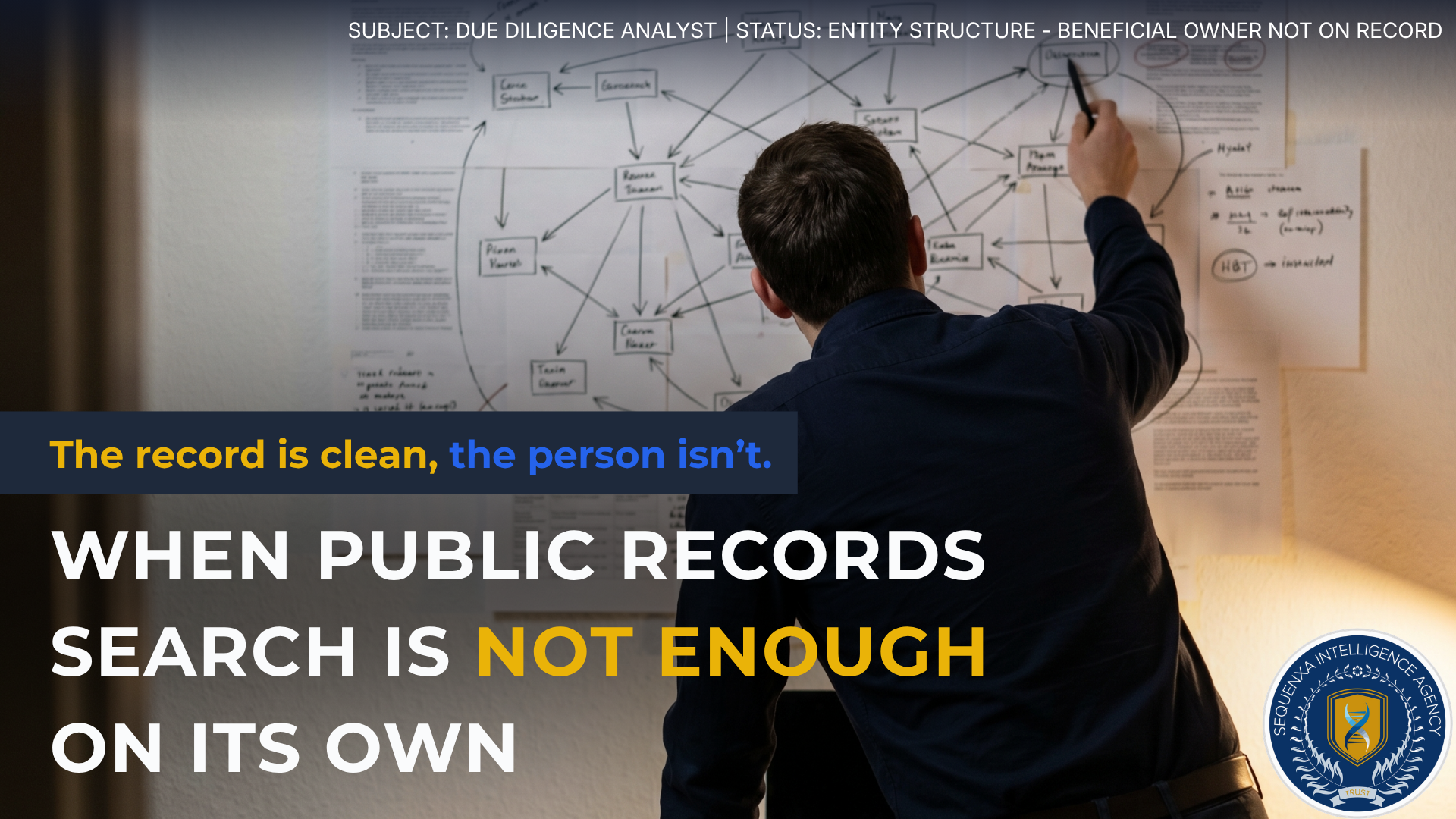
Behavioral Analysis in Modern Threat Detection
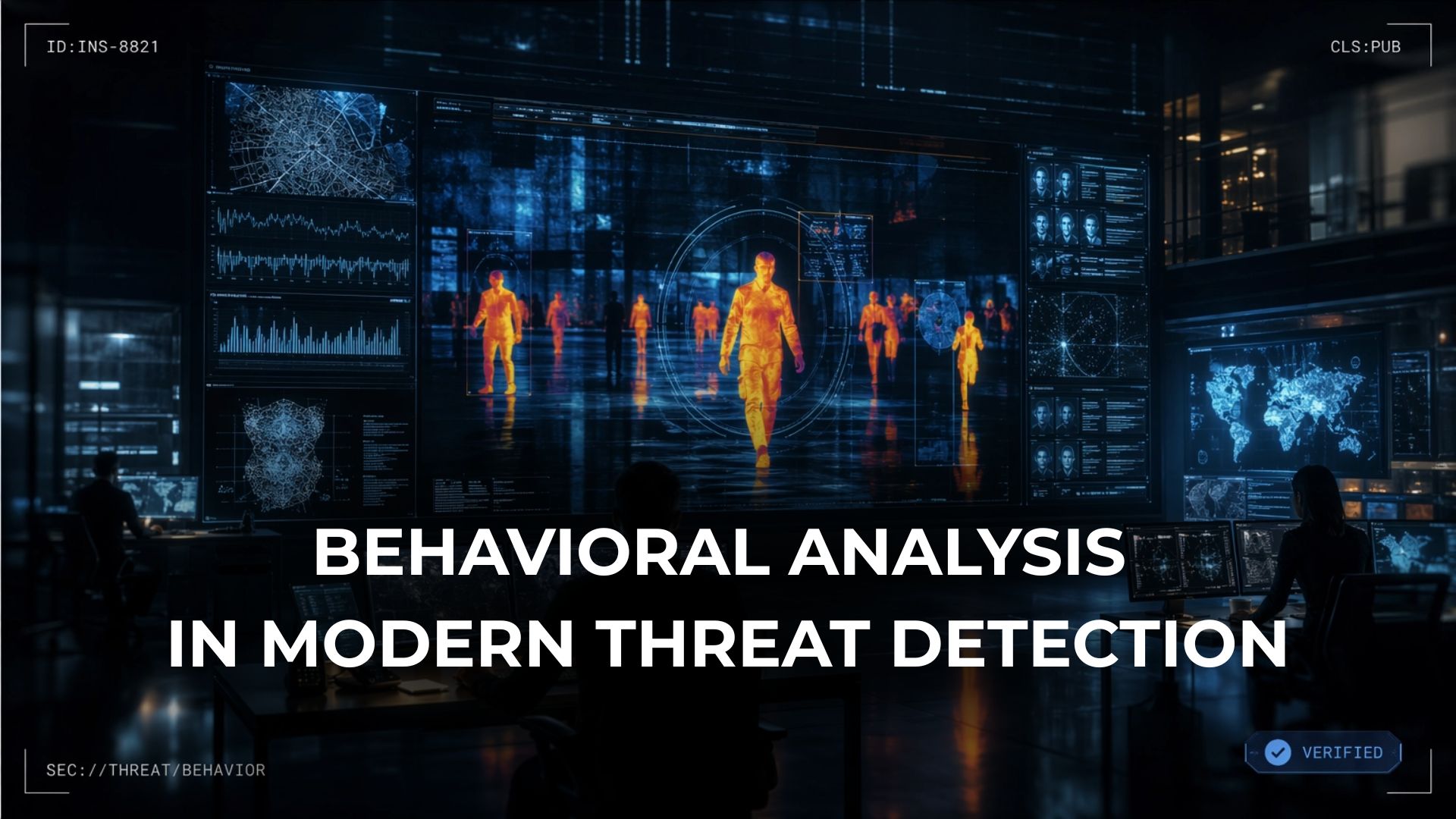
Behavioral Analysis in Modern Threat Detection
Most organizations treat threat detection as a perimeter problem. Something breaks in, an alert fires, someone responds. That model works for a narrow class of attacks and almost nothing else. It does not catch the employee who spent three months quietly staging data before he resigns. It misses the estranged ex-partner escalating online before she shows up at reception. It misses the kind of incident that starts as a pattern and only ends as a news story.
Behavioral analysis catches those. That is the discipline's job, and it does it before the incident rather than after.
The core premise of modern threat detection is that the threat itself is almost never the first signal. The behavior leading up to it is. Organizations that treat that behavior as noise end up responding to incidents. Organizations that treat it as intelligence end up preventing them.
What behavioral analysis is in threat detection
Behavioral analysis is the practice of identifying people, accounts, or systems that are moving toward harm by studying what they do, not who they appear to be. It looks at patterns of action, changes from baseline conduct, and deviations from normal operating behavior. Applied to people, it draws on 25 years of research from the U.S. Secret Service's National Threat Assessment Center. Applied to systems, it draws on user and entity behavior analytics models built for insider threat programs. Both versions share a common premise: threats leak. Something observable almost always happens before something unrecoverable.
The discipline sits inside a broader intelligence framework. It feeds threat assessment processes, executive protection programs, and predictive risk models. It also informs workplace investigations, because the earliest indicators of misconduct are usually behavioral before they are evidentiary.
Why it matters more than most organizations realize
In 65% of the 173 mass attacks studied by NTAC between 2016 and 2020, attackers displayed behaviors that concerned people around them before the attack occurred. In 57% of those cases, the concerning behavior made observers fear for the safety of themselves or others. That is a majority.
The signals were present. The systems to capture and act on them were not.
The insider threat picture looks similar. The Ponemon Institute's 2025 Cost of Insider Risks Global Report put the average annual cost of insider incidents at $17.4 million and the average containment window at 81 days. These are not incidents that happened in an instant. They happened over months of observable activity. The point of behavioral analysis is to compress that window from months to days.
What the discipline actually looks at

Behavioral analysis breaks into two operational tracks that overlap but measure different things.
Human behavioral indicators are the observable actions, communications, and states of being that research has repeatedly linked to escalating risk. These include:
• Grievance narratives that intensify over time, particularly against specific targets
• Increased interest in weapons, prior attackers, or attack methodology
• Communicated intent, whether explicit threats or "leakage" to third parties
• Identification with past attackers or extremist movements
• Acute stressors (job loss, relationship breakdown, financial collapse) layered on top of existing instability
• Sudden changes in routine, withdrawal from normal social channels, or final-stage behaviors such as giving away possessions
Digital and system behavioral indicators are the machine-observable patterns that signal compromise or insider risk. These include:
• Access to resources a user has never touched before, or has not touched in months
• Large-volume data movement, especially near a resignation or performance dispute
• Logins at unusual hours from unusual locations or unusual devices
• Use of personal storage, unauthorized cloud services, or removable media
• Deviations from role-based peer behavior, when one person on a team starts behaving unlike anyone else on that team
Neither track alone tells you the full story. The value shows up when both are correlated, which is the entire reason this exists as a discipline rather than a checklist.
How risk scoring turns signals into decisions

Risk scoring is the mechanism that turns raw behavioral signals into something an organization can act on. Without it, you have a pile of observations and no basis for prioritizing response. With it, you have a ranked, defensible picture of where attention and resources should go.
A competent risk score rests on four inputs.
Severity of behavior. A vague complaint about a manager is a different signal than a detailed statement about wanting to harm that manager. A one-time 50 MB download is a different signal than sustained exfiltration to an external account. Severity is measured against known precursor patterns, not gut feel.
Proximity and capability. Does the subject have access to the target, the means to act, and the opportunity to do so? An angry former contractor with no current credentials is a lower score than a current employee with privileged access and an active grievance. In executive protection, proximity is geographic, digital, and relational at once.
Trajectory. The direction and speed of change. A score sitting stable at 6 out of 10 means something very different from a score that was 3 last quarter and is 7 now. Trajectory is the single most important variable, because targeted violence and insider harm both follow escalation curves. Static snapshots miss what sequential assessments catch.
Mitigating factors. Counseling engagement, employment stability, family support, legal intervention, medical treatment, documented de-escalation. A good score accounts for what is reducing risk, not only what is creating it. Ignoring mitigators is how organizations over-respond to a person who is actually stabilizing and under-respond to someone whose apparent calm is really detachment.
Risk scoring is not a verdict. It is a triage tool. It tells a threat management team which case needs a multidisciplinary meeting this week, which case needs a monthly check-in, and which case can be closed. A well-built scoring model improves signal-to-noise. It does not replace judgment.
Early warning systems, and why most of what gets called one isn't

Most organizations say they have an early warning system. Most of what they have is a reporting inbox and a policy document. The gap between those two things and an actual system is wide enough to drive a catastrophic incident through.
A working early warning system has five components.
1. Multiple intake channels. A single HR hotline is insufficient. Real systems include anonymous reporting, peer reporting, manager escalation paths, external hotlines for clients and vendors, and integrations with security operations for digital indicators. HR Acuity's Workplace Harassment and Misconduct Insights research found that 52% of employees have witnessed or experienced inappropriate, unethical, or illegal behavior at work, and 42% of those people never reported it. Anonymous channels narrow that gap substantially. They do not close it.
2. A multidisciplinary triage team. Legal, HR, security, and sometimes behavioral health need to see the same information at the same time. When
each function only sees its slice, the pattern that matters most gets missed. The team meets on a defined cadence, works from standardized case files, and has authority to act without waiting for executive sign-off on routine decisions.
3. Baseline behavioral data. You cannot detect an anomaly without knowing what normal looks like. This applies to both people and systems. For digital monitoring, it means UEBA models that establish baselines for every user and entity on the network. For human monitoring, it means supervisors who know their teams well enough to notice change, and policies that treat "something is off" as a valid reason to escalate.
4. Sequential assessment, not one-off evaluation. A case opened and closed in 48 hours on the basis of one conversation is not a case. A case followed for three months, with documented check-ins, updated risk scoring, and a clear off-ramp or intervention pathway, is. The NTAC research is unambiguous on this point: targeted violence is a process. The assessment has to match the timeline of the behavior.
5. Closing the feedback loop. A 2026 TalentLMS survey of 1,000 U.S. workers found that 16% of employees who reported misconduct saw no visible response at all. The people around those reporters learn one lesson from that: reporting is useless. Once that lesson sets in, the early warning system is dead even if it still exists on paper. Systems that close the loop, even with a confidential "we received this, here is what is happening" acknowledgment, keep the pipeline alive.
Where behavioral analysis fails
The discipline is powerful. It is not foolproof, and a mature program is honest about where it breaks down.
It fails when organizations screen for demographics instead of behavior. Profiling people based on gender, race, political orientation, or lifestyle is both ethically indefensible and empirically useless. NTAC's own research has shown that no demographic profile reliably predicts a targeted attacker.
It fails when assessors confuse threats with threat behavior. Many people who pose a threat never make one. Many people who make a threat never pose one. Treating every communicated threat as equally serious floods the system. Treating only explicit threats as relevant misses most of the actual risk.
It fails when the toolset is purely digital. UEBA models can flag a 4 AM login from a new country. They cannot tell you that the employee just found out about a divorce, or that his manager has been passing him over for promotions. The context lives outside the logs.
It fails when the organization has no intervention pathway. Identifying a person of concern and then doing nothing is worse than not identifying them, because it creates a false sense that the problem is handled. A functioning program has off-ramps: counseling referrals, leave options, workplace adjustments, legal support for victims, and, where warranted, separation processes designed to minimize escalation risk.
The shift that matters
The old model of threat detection is reactive. Something happens, an investigation opens, a lesson gets learned, a report gets filed. The model that behavioral analysis makes possible is anticipatory. You study the patterns that precede harm, build the systems to capture those patterns, and intervene before the pattern completes.
The research has existed for 25 years. The tooling has existed for more than a decade. The obstacle has never been capability. It has been whether the organization is willing to treat early signals as signals, rather than as inconveniences to be filed, deferred, or "looked into when things calm down."
Most organizations still are not. The ones that are generally do not make news. The attacks they prevented did not happen, which is exactly what the discipline is for.
Related reading
Sources
• U.S. Secret Service National Threat Assessment Center, Mass Attacks in Public Spaces: 2016–2020• Ponemon Institute, 2025 Cost of Insider Risks Global Report
• HR Acuity, Workplace Harassment and Misconduct Insights
• TalentLMS, 2026 Workplace Misconduct Survey
Ready to Take the Next Step?
Learn how Sequenxa can help protect your organization with intelligence-driven solutions.
Get Started